Captured into the Bedroom of the Enemy Emperor (1 Chapters Left to Complete) - Chapter 12
The Arcan continent was home to two empires—Tane and Karsik—and thirteen larger and smaller kingdoms.
The era of peace without war cracked and shattered when Emperor Kazan, a warmonger, began his campaign to conquer the kingdoms.
The Age of Bloodshed.
True to his infamous title as a cruel warmonger, Emperor Kazan conquered kingdom after kingdom. His armor and battle garb never dried from the blood that soaked them.
He personally directed battles and, from the year his crown prince turned thirteen, ordered him to don armor and observe the wars.
The Karsik Empire, which had previously only engaged in minor conflicts, fought several wars against the Tane Empire upon the request of allied kingdoms.
The war between Tane and the kingdoms supported by Karsik dragged into a prolonged conflict, causing enormous troop losses.
Ultimately, at the proposal of the late Karsik Emperor Matthias Karl Berk, Emperor Kazan agreed to end all warfare on the continent and signed a non-aggression peace treaty.
As part of peaceful exchanges between the empires, Karsik’s crown prince, Har Chen, and Princess Leac, the noble-born daughter of a grand ducal house, were sent to study at the Tane Academy.
Emperor Tane and Empress Pamila had come to Karsik for winter hunting.
In terms of area, the Karsik Empire in the northern part of the continent was larger, but over half its territory consisted of glaciers so white they verged on blue, along with vast forests.
The mountains and forests harbored hundreds of valleys and lakes formed by melting glaciers.
In contrast, the Tane Empire, situated in the south-central region of the continent, had seized numerous kingdoms, and most of its vast lands were fertile, bordered by seas to the west and south.
Trade guilds flourished early, leading to advances not only in commerce and economy but also in culture and education, resulting in the rise of major commercial cities centered around the capital and border towns.
Numerous minority tribes roamed the Arcan continent like nomads.
These tribes, ranging from mere dozens to several hundred members, typically settled deep within mountains and valleys before vanishing without a trace.
They were collectively known as the Hoon.
The Hoon excelled in handling mushrooms, medicinal herbs, and poisons and possessed transcendent vision that could read wind directions and the currents of rain and lightning.
Amir, a transcendent descendant chosen from among the Hoon, was selected to deliver prophecies and heal humans.
Though continental peoples revered the Hoon as sacred, only a tiny fraction possessed supernatural abilities. Most Hoon were inherently lazy and impoverished, causing many to dismiss entire Hoon groups.
Both empires maintained temples where high priests performed rituals, though temple authority remained minimal. Kingdoms and minorities worshiped various gods, primarily through totems and shamanistic practices.
The Tane Empire maintained a temple atop Mount Hesperos, centered around its empresses, where priestesses performed rites and received prophecies.
A virgin named Amir, chosen from the Hoon as the priestess’s successor, was discovered. Amir bore five red scars on the back of her neck since birth—marks known as the “Clawprints of the Divine,” a sign of the Hoon.
Empress Aldisha of Tane visited the Hesperos Temple regularly after conceiving.
The priestess sat upon a high-legged chair placed beneath the sacred Tanya tree. Her hand, gripping a staff carved from a thick, straight Tanya branch, remained perfectly steady.
Chewing Tanya leaves said to awaken wisdom, the priestess awaited the voice of the divine.
Over four days and three nights, the priestess’s eyes gradually turned crimson. A metallic rasp emerged from her throat as she chanted the hymn dedicated to the god, and the sacred tree swayed as if caught in a whirlwind.
At last, the prophecy descended.
Sun and moon.
They, who ought to remain apart at a proper distance, now press back-to-back.
That which was originally the moon has swallowed the sun, and the sun has absorbed the moon’s essence. When sun and moon intertwine, the sun shall devour and rend the moon.
Keep them apart. Let the sun’s energy be shared with the moon.
A grating, metallic screech delivered the prophecy. Upon finishing the recitation, the priestess collapsed unconscious beneath the Tanya tree, utterly drained.
Divine power pierced her rigid body, and the priestess lost her voice forever.
Amir, the Hoon maiden who had transcribed the prophecy, waited for the priestess to awaken.
As soon as the priestess regained consciousness, she tore open the robes of the empress seated on a silk mat. She pressed her ear against Empress Aldisha’s unnaturally swollen belly.
Two heartbeats, pounding out of sync, echoed in her ears.
“It’s twins,” Amir relayed. “The priestess says you carry a girl child bearing the sun and a boy child imbued with the moon’s essence.”
“Twins? Inside this womb…?” Aldisha gasped.
“The priestess says the girl child born holding the sun must be confined to a tower to keep her power in check.”
Interpreting the prophecy was as crucial as receiving it; Amir possessed the unique gift of discerning the divine will and offering solutions.
Empress Aldisha stared blankly into the air, her eyes pale with shock.
“How monstrous, how unnatural! How can a human womb—no beast’s—carry two lives? And of opposite genders, no less!”
Aldisha was certain this was punishment for the emperor’s depraved and perverse bedroom conduct. Trembling, she clutched her roundly swollen belly.
She shuddered, recalling nights when the emperor, adopting unnatural postures, took her repeatedly in a single evening.
“Lady Amir.”
Clutching her grotesquely distended abdomen as if ready to tear it open, Aldisha looked alternatingly at the priestess and Amir.
“What if… after birth, we simply dispose of the girl child who holds the sun?”
The priestess removed her crimson veil and gently stroked Aldisha’s protruding belly. A metallic rasp escaped her lips, and Amir conveyed her words.
“Poor Aldisha,” the priestess said. “You wander the dark palace with your milk-swollen breasts bared.”






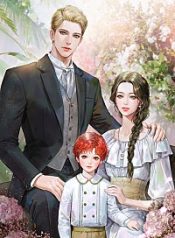


While unconscious, the priestess had witnessed visions of the distant future unfolding like a panorama.
“When the moon’s feeble strength wanes, it shall draw upon the sun’s aid. Until adulthood, let them support one another—but keep their distance,” the priestess declared.
“Should we conceal from His Majesty that they are twins?”
“Can you hide the sun? Can you conceal the moon? Cover your eyes with your pitiful hands,” the priestess replied.
“Why must this happen to me?”
Aldisha was a chaste woman.
Born a princess of the coastal Kingdom of Torun, which bordered the northern Karsik Empire, she had become the crown princess of Tane at seventeen.
Kazan, five years her senior, was experienced with mature women. Even as crown prince, his tyrannical tendencies were evident. The warmonger’s desires constantly simmered, and he lacked self-control.
Aldisha’s awkward, stiff demeanor during their first encounters left him dissatisfied. He visited her chambers only a few times formally during their early marriage, finding it thoroughly unappealing.
Soon, he turned to languid, alluring women who effortlessly tempted him and eagerly fulfilled his every desire.
By the time he grew weary of those seductive, wanton women, he had ascended the throne. Out of duty, he visited Empress Aldisha and discovered an unexpected thrill. Emperor Kazan became fascinated with awakening the restrained desires of his virtuous empress.
The empress blamed the emperor for conceiving the twins. Nowhere across the empire, its kingdoms, minority tribes, or even other continents existed any record of twins of opposite genders.
By her fifth month, Aldisha’s belly swelled rapidly. She secluded herself in a distant palace away from the main residence.
Though she endured repeated fevers and hemorrhaging, she relied on palace physicians and Hoon herbal remedies to survive until childbirth, carrying both twins safely.
True to the priestess’s prophecy, sun and moon—twin boy and girl—were born. They were the first opposite-gender twins ever born in the entire Arcan continent since the empire’s founding.
Emperor Kazan executed the midwife who aided the empress’s delivery, the Hoon girl Amir, and eighteen maids immediately after the birth.
Amir, who had delivered the prophecy, possessed the gift of foresight. Barely escaping death due to Aldisha’s intervention, Amir was cast onto Mount Herperos, stripped of her eyes and tongue.
For ten nights and eleven days, the eyeless Amir lay face-down in the dirt on Mount Herperos, writhing in agony.
Though her eye wounds burrowed inward, her severed tongue sprouted anew like a fresh shoot. The wind whispered the melodies of a lute into her ears.
Thus, the Hoon girl Amir became the Blind Lutenist Crone, drifting like a cloud wherever the wind carried her.
The empress, having given birth to twins, growled like a lioness. Whatever faint kindness the emperor had retained vanished completely.
Her fierce protection of the girl child—whose life the prophecy deemed forfeit had her gender been reversed—made her appear the very image of a lioness defending her cubs.
The twins differed greatly at first glance. Though both shared porcelain-pale, flawlessly smooth skin, golden hair, and azure eyes, the boy was shockingly small in stature.
The only publicly known detail about the secluded palace was that it served as the empress’s private retreat, its courtyard brimming with red roses. She placed Patricia in the West Tower with her wet nurse, Eva.
Whenever Aldisha, nursing Patrick in the main palace, found herself haunted by thoughts of Patricia on pitch-black nights, she rushed to the secluded palace without even adjusting her robes.
When she tried to nurse Patricia, the child’s unexpectedly heavy presence in her arms made her push her away. Though Patricia hadn’t nursed for days, she was sturdier than Patrick, her blue eyes gleaming brightly.
The emperor elevated Viscount Lasbur’s daughter, Pamila, a woman of humble nobility, to the rank of empress consort.
Pamila Lasbur wielded her cunning mind skillfully.
With innate charm and sensual movements, she seduced Emperor Kazan, expertly stoking his lust until, at the peak of passion, she effortlessly extracted whatever she desired.
She was so exquisitely beautiful that she could steal the soul of the emperor returning from battle, tempting him with her smooth, alluring body.
Unlike the empress, who detested war and bloodshed, the empress consort personally removed the emperor’s bloodstained uniform with her own hands.
The emperor built the lavish Pyrope Palace for his consort, as resplendent and beautiful as she was.
Its exterior was adorned with deep red almandine garnets matching Pamila’s fiery hair.
In that palace, Pamila gave birth to Prince Chris.
Chris bore an uncanny resemblance to Kazan in appearance but inherited his mother’s ambitious nature.
He stopped at nothing to obtain what he desired. The emperor was utterly charmed by Prince Chris, who nestled affectionately into his arms and cooed endearments.
The garnet pyrope—the deepest red of all garnets—was a gemstone mined in Empress Aldisha’s homeland, the Kingdom of Torun.
Through Pamila’s intervention, the Lasbur family was entrusted with mining and transporting garnet pyrope from Torun.
The once-humble Viscount Lasbur’s family established the Lasbur Trading Company and relocated from their small northern estate to a castle near the capital.
Using her stunning beauty and clever mind to their fullest, Pamila turned her hand to crafting deadly poisons and their antidotes.
Her first victim was Empress Aldisha.
A maidservant bribed by Pamila sprinkled small amounts of poison—received from Pamila—into the empress’s soup, salad, and tea, gradually increasing the dosage while monitoring reactions.
At first, Aldisha suffered hallucinations, followed by paralysis of her tongue and limbs. In the end, she writhed in agony as her lungs and internal organs seemed to burn away.
Three months after consuming the first poisoned meal, Aldisha died, her face turned a sickly green.
It was the year Patrick and Patricia turned fifteen.







Male lead fell into her trap — and shattered when she walked away
This is also on my reread list!
This one is a slow burn, but when it burns, it burns hard.
Definitely worth a read, y’all!
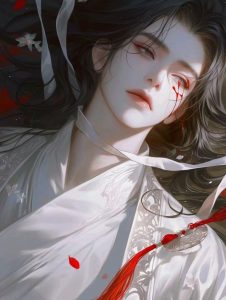
The story follows a thousand-year-old seductive spirit who, on a bet, sets out to charm the male lead—a once-promising but unfortunate cultivator.
But just when she succeeds in making him fall for her, she heartlessly leaves, driving him to madness.
Determined to find her at all costs, he captures her, keeping her by his side no matter what, even if she hates him.
I love this kind of trope—I enjoy watching the male lead suffer in agony.
The ending drags a bit with unnecessary filler, but that’s fine.
As long as I enjoy the beginning, I’m good.
Intro
As an enchantress, Su Heng possesses captivating eyes and charming beauty, easily manipulating the joys and sorrows of living beings at her fingertips.
But to enchant a god, making him taste the bitterness of love’s separation, long-lasting resentment, unattainable desires, and inability to let go…
Do you dare?
Su Heng assists a divine lord in his cultivation, aiming to make him experience all the sufferings of love, so that he can attain the Great Dao.
Only after being chased down from the heavens by the divine lord, confined and completely possessed by him, does she realize how successful she has been.
The once gentle and polite youth has transformed into someone she no longer recognizes.
[Touch the gear icon in the bottom right corner of the screen to move to the next chapter if you want.]
Re-reading this chapter, it made realize how little Patricia regarding her life compared to Patrick, all because of her guilt over her twin’s sickness which she assumed caused by her taking away his nutrition during pregnancy (in my opinion, it’s an entirely absurd superstition and baseless theory at best). Glad Patricia has come far by started relying in Harchen until she can trust him and vice versa.
Oh! Harcen made a surf board and have Patricia surfing at the sea? That’s so nice of him! If I were her, I too would be thrilled as I riding the waves.
Could it be the grave with the red hibiscus is the late Empress’ (a.k.a Patricia and Patrick’s mom) grave? Talk about cutting onion.